Sunlight dances on the termite mounds like molten gold as I step onto the red earth of Litchfield National Park, amazed that I am still standing on Planet Earth.
Located just an hour and a half from Darwin, this national park stands as a vivid contrast to any other landscape I’ve seen in my home of Australia.
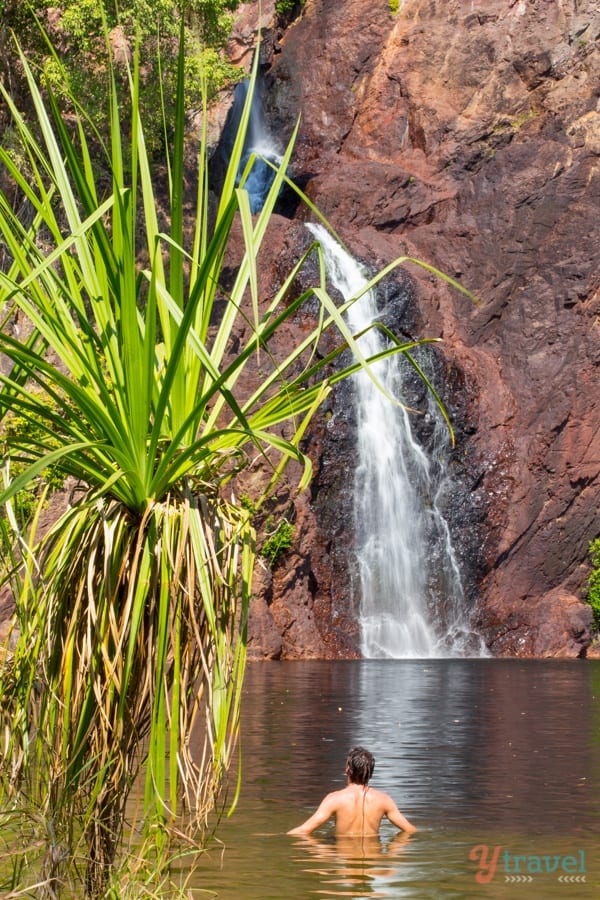
Waterfalls cascade into inviting plunge pools that are safe to swim in, a rarity in Australia’s Top End, and ancient sandstone escarpments rise above magnetic termite towers, or provide a canvas for ancient Aboriginal rock art that has survived thousands of years.
If you’re thinking of visiting Litchfield National Park, but not sure what to do or what to expect, here is everything you need to know before you lose yourself in one of the Northern Territories top outback destinations.
- A brief history of Litchfield National Park
- How long do you need to see Litchfield National Park?
- Things to do in Litchfield National Park
- 1. Swim in the Buley Rockhole
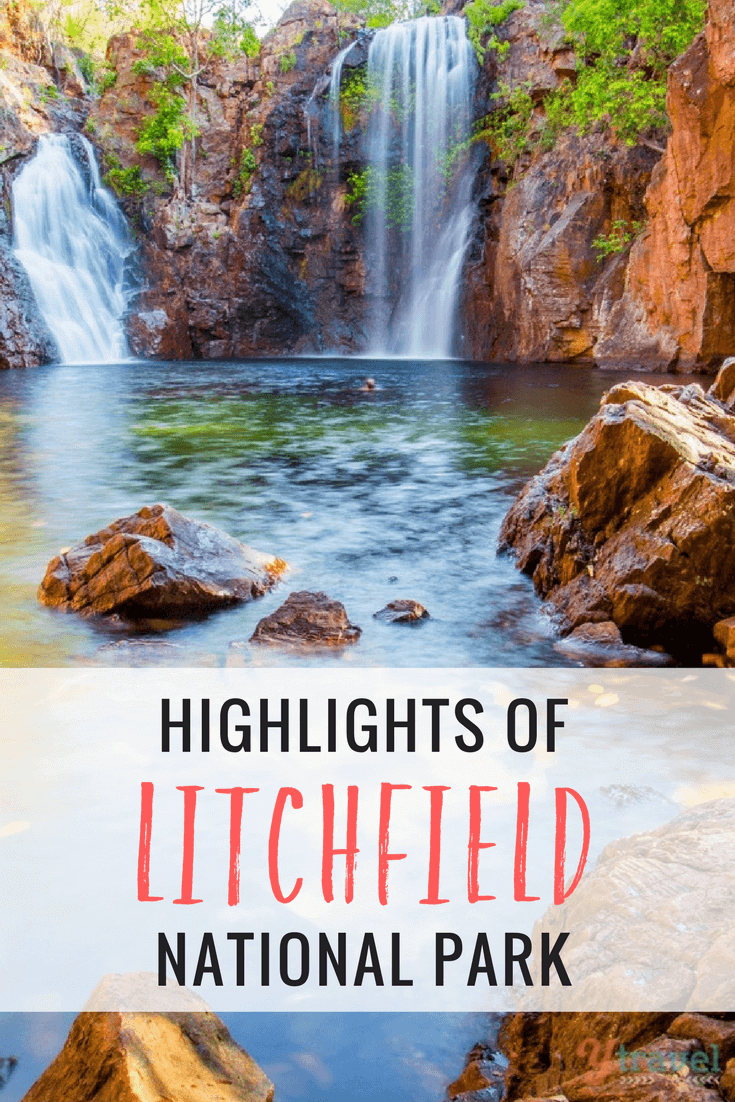
- 2. Swim in Florence Falls Plunge Pool
- 3. Have A Picnic At Wangi Falls
- 4. Hike to Walker Creek
- 5. Check out the Magnetic Termite Mounds
- 6. Watch the sunset from the Tolmer Falls Viewing Platform
- 7. Go Four-Wheel Driving at Blyth Homestead
- 8. 4WD to Surprise Creek Falls
- 9. Learn about The Park’s Traditional Owners at the Batchelor Museum
- 10. Visit the Batchelor Butterfly Farm
- 11. Adventure to Sandy Creek Falls
- Is Litchfield National Park worth visiting?
- Where to stay in Litchfield National Park
- Best time to visit Litchfield National Park
- Opening hours and entrance fee
- Getting there
- Tips for visiting Litchfield National Park
- Final thoughts
- Pin To Save It On Pinterest
A brief history of Litchfield National Park
Long before tourists discovered its crystal pools made for swimming, Litchfield was home to the Wagiman, Marranunggu, and Wulna peoples, whose connection to the land stretches back tens of thousands of years.
The land was then discovered by European explorers in the 19th century, drawn by fertile floodplains and the promise of mining, but because of the rugged terrain, the area around Litchfield was kept at bay and used primarily as a place to go for a dip in the fresh water.
Because the water is fresh, there’s no danger of crocs, since it’s the saltwater crocs you need to be wary of. This is a rarity in the Top End of Australia, and is one of the reasons why Litchfield is so popular to visit.
Litchfield was officially declared a national park in 1986. This national park status gives it protection, and now its striking waterfalls, unique termite mounds, and craggy gorges can be admired for generations to come.
How long do you need to see Litchfield National Park?

Litchfield National Park is 1,458 square kilometres, which by Australian national park standards is quite small. So, you only really need two days to experience the best parts of Litchfield National Park.
We highly recommend you camp in one of the campgrounds, so you can wake up early and spend a full day exploring the rockholes and plunge pools. Some people visit on a day trip from Darwin, but in my opinion, I think those people are missing out.
Things to do in Litchfield National Park
Litchfield National Park is all about waterholes that are safe to swim in, as well as spectacular sunsets and hikes. Here are some of our top things to do that we did in the national park.
1. Swim in the Buley Rockhole
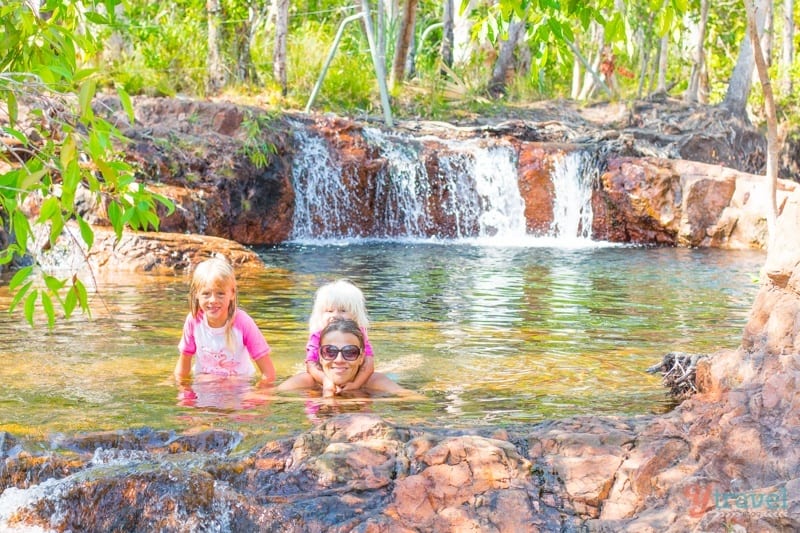
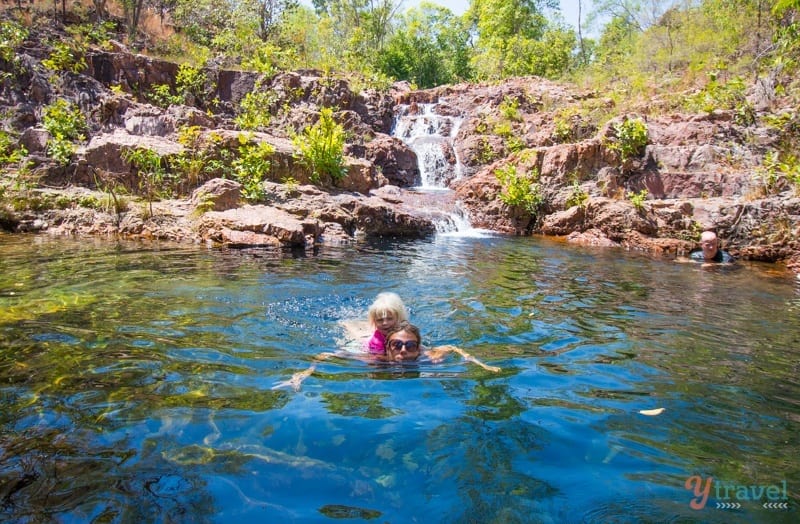
Buley Rockhole was my favourite place in Litchfield National Park, and is a must-see for anyone visiting. It was the perfect place to visit with our kids and we recommend getting there early to escape the tour buses and have the rock pool serenity to yourself.
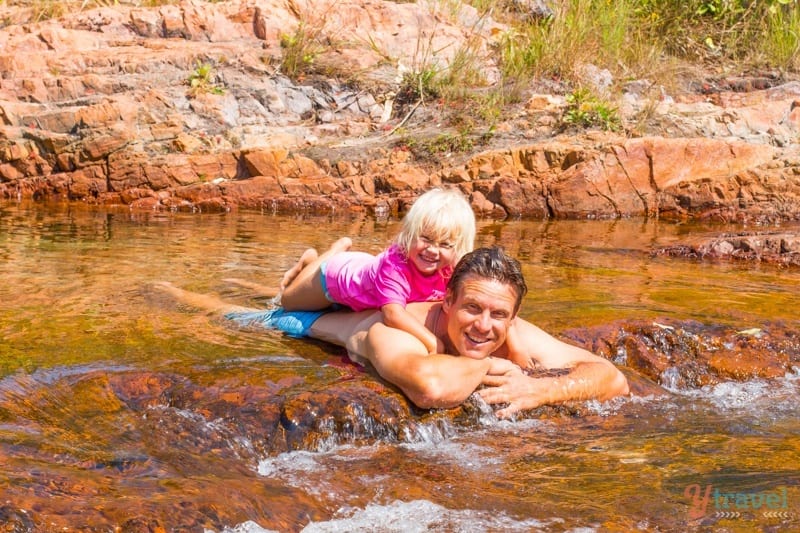
The Buley Rockholes are a series of rocks with holes that have water cascading through them. Walk up to the top and take your pick of rock holes to sit in for a while. Spend a few hours moving from one to the other. It’s hot enough to warrant it – even in the winter.
2. Swim in Florence Falls Plunge Pool
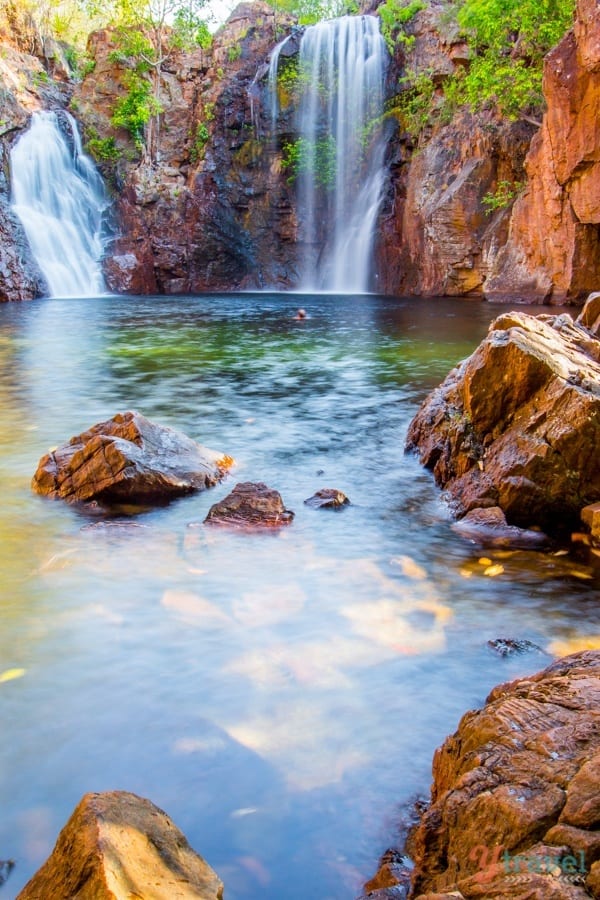
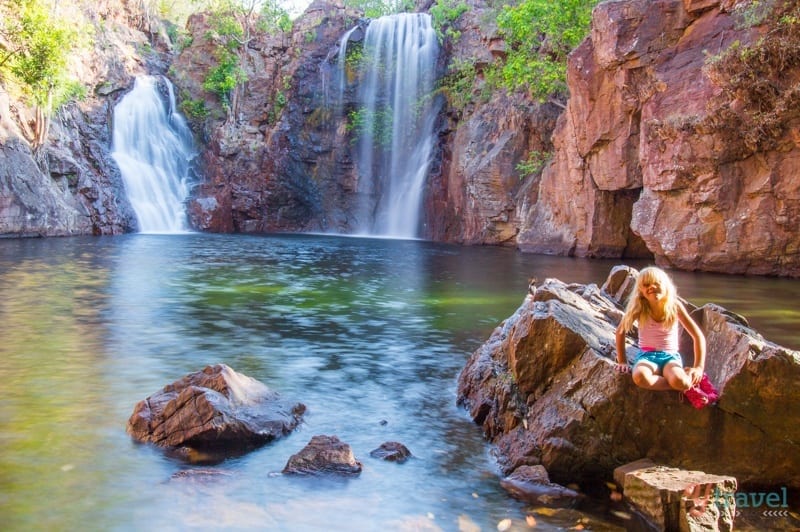
Florence Falls is a double-plunge waterfall leading to a popular swimming spot. There is a steep staircase down to the pools passing through a lovely viewing point, but it’s not too strenuous.
Otherwise, you can take the walk down to the falls from the car park via the Shady Creek track. We didn’t get to do it, but it’s meant to be very pretty.
And you can walk between Florence Falls and Buley Rockholes. The Litchfield waterfalls were simply amazing to see.

3. Have A Picnic At Wangi Falls
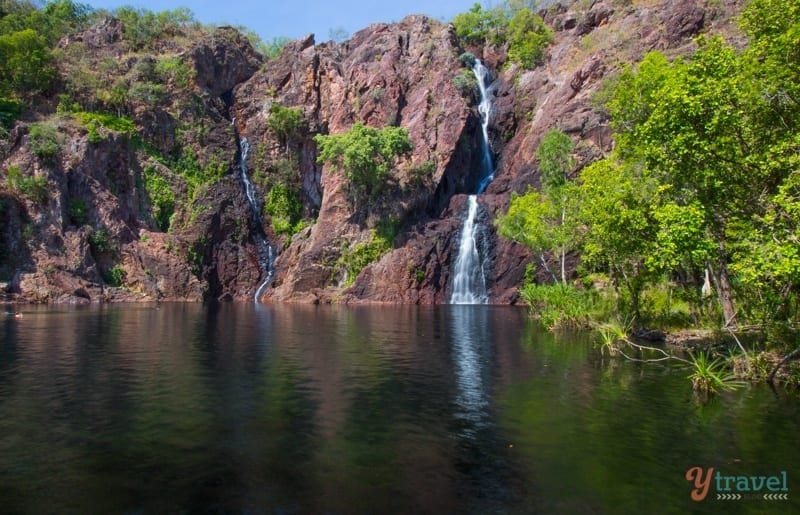
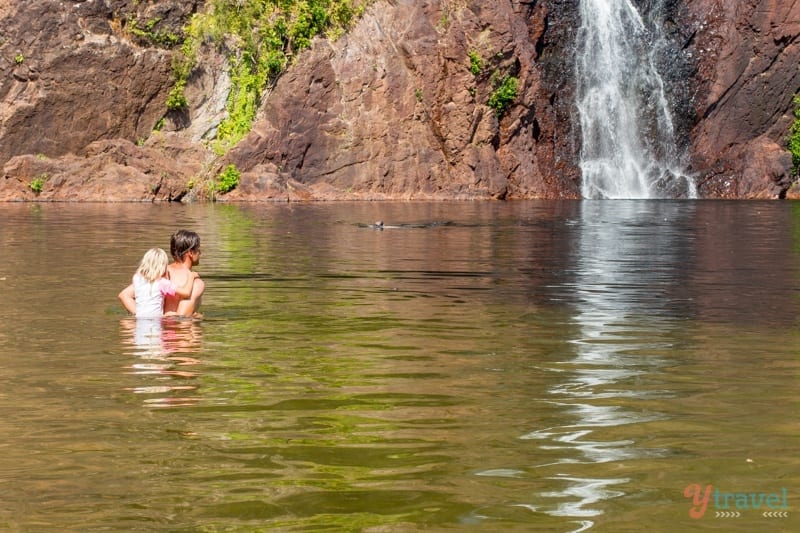
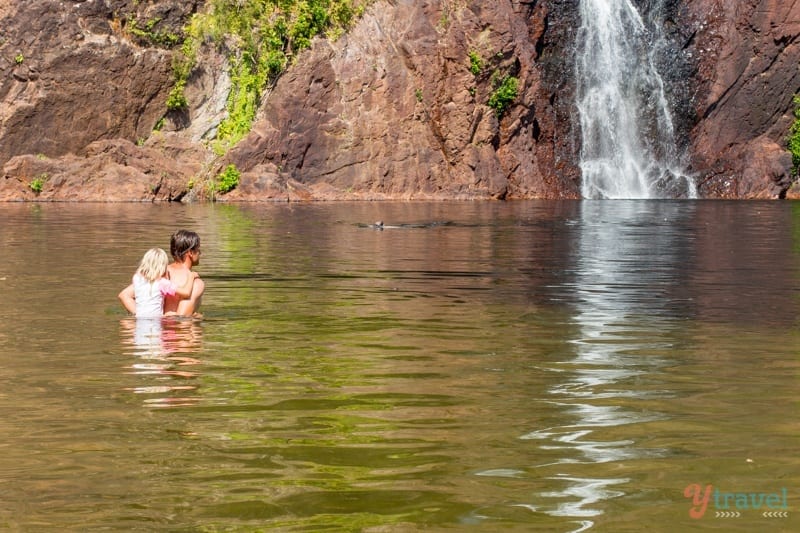
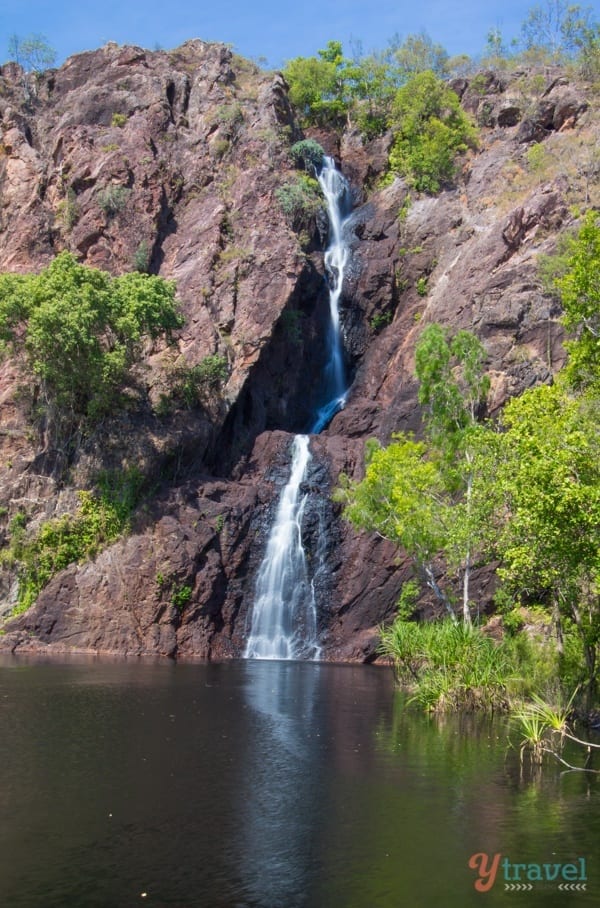
Wangi Falls is probably Litchfield’s most popular attraction with the largest swimming hole, picnic area, and onsite cafe – our kids enjoyed an ice cream here on a hot day, and it can be especially busy around lunchtime in peak season.
If you’ve got young kids like me, entering the waterhole is easier than at Florence Falls and it’s clear and shallow in close. Just be aware that it gets deeper and darker the further you swim out.
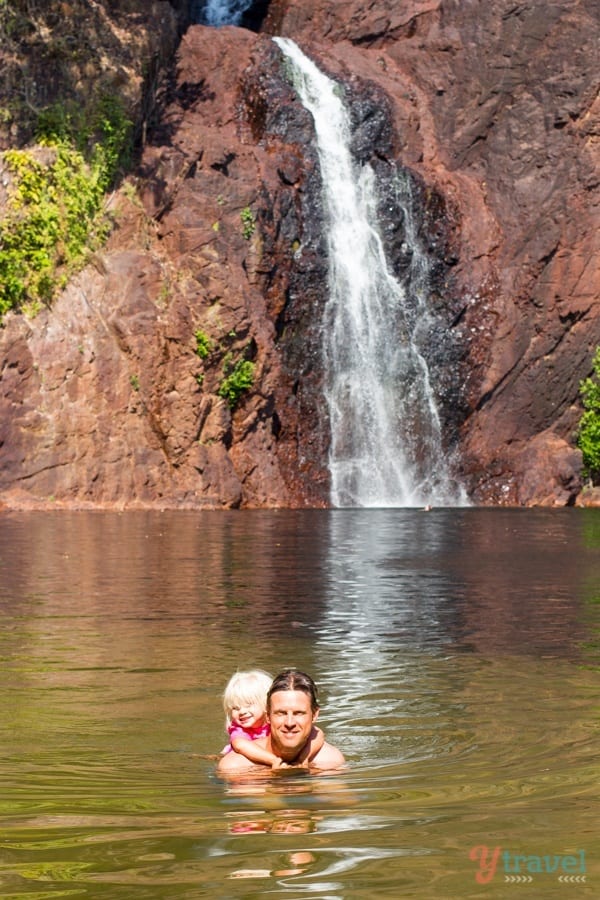
The Wangi Falls campground is a great place to stop for a night. There’s a BBQ area, and all the facilities you need for a comfortable night such as clean toilets and showers.
4. Hike to Walker Creek
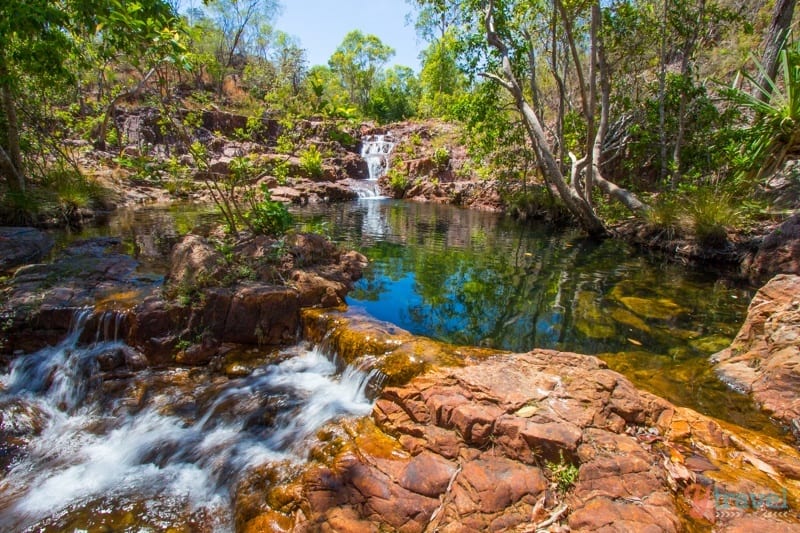
If you want a swimming hole experience that is away from the crowds then take the 3km walk along Walker Creek to shared swimming hole number six. It was small, but just lovely to have all to ourselves and so refreshing after such a hot walk with two kids.
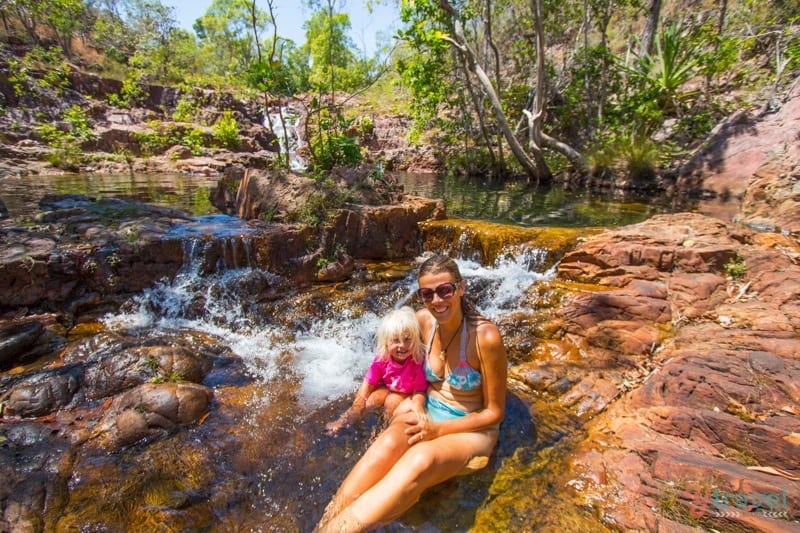
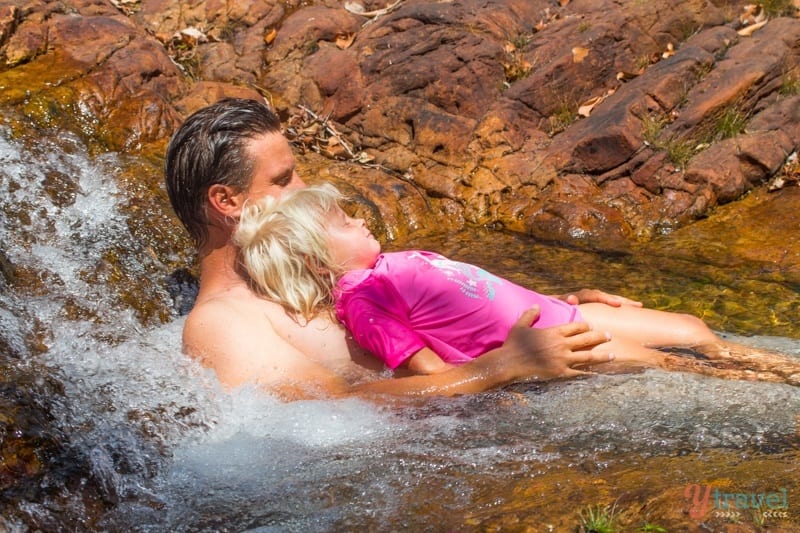
Along the walk, you’ll see various private campsites next to the creek with their own private swimming hole. Worth considering pitching a tent if you like bush camping. Number one was my pick.
5. Check out the Magnetic Termite Mounds
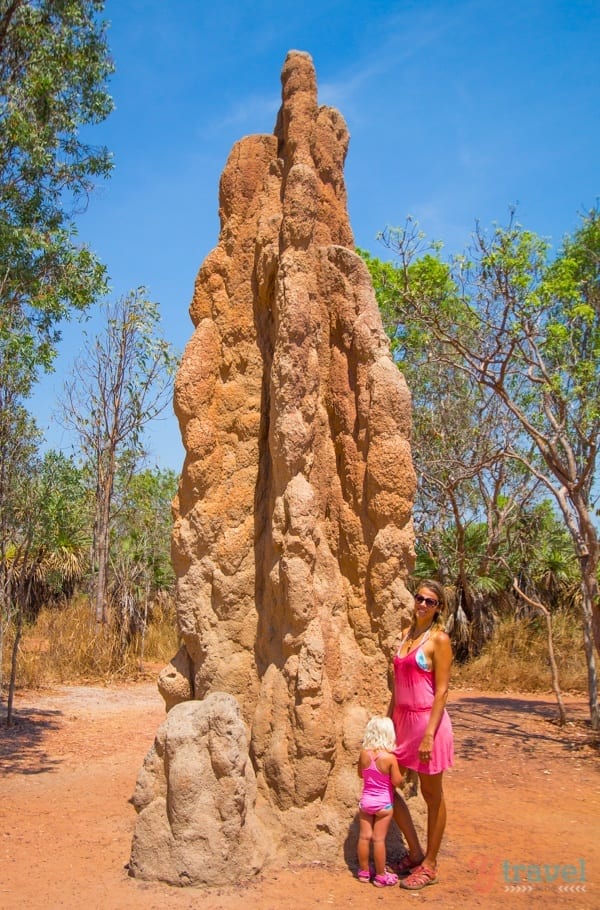
These termite mounds are incredible. Built by thousands of termites of different species, with a north-south orientation to control the temperature inside.
These magnetic insects have designed their home to minimize exposure to the sun. Amazing, right? The mounds are more than 100 years old and stand up between two and four meters tall.
There is a boardwalk that takes you close to the mounds, the tallest and most impressive being the four-metre-high Cathedral Termite Mounds. You will pass these termite mounds first if you enter the park from Darwin, we saved them for last on the way out.
6. Watch the sunset from the Tolmer Falls Viewing Platform
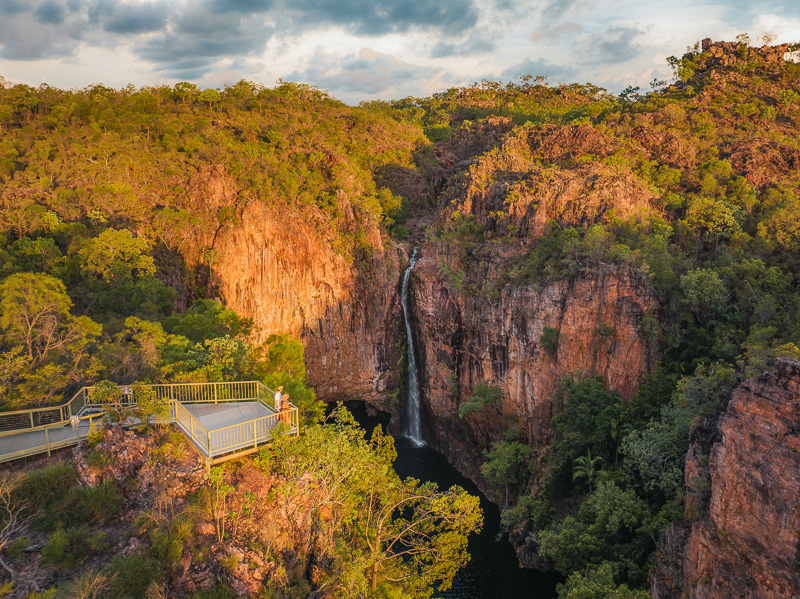
Tolmer Falls is one of the most famous sites in Litchfield National Park. This huge waterfall has two large falls that fall into a deep plunge pool that you can swim in during the dry season.
It’s also one of the best places to visit in Litchfield National Park for sunset. Located just a short walk from the falls are two viewing platforms that overlook the waterfalls.
There’s also a 1.6km loop walk from the car park which takes you past Tolmer Creek, a tributary, and other rock pools (that you can’t swim in, unfortunately).
7. Go Four-Wheel Driving at Blyth Homestead
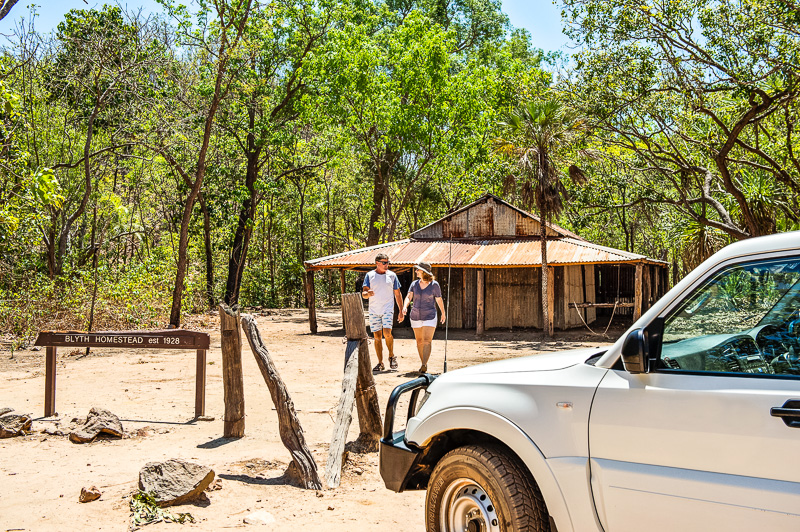
There are many 4WD tracks in Litchfield National Park, but one of the most popular is the track to Blyth Homestead.
Blyth Homestead is an old mining town that has been abandoned since the 1960s. It was built in 1928 when Litchfield was rich in tin. The area serves as a reminder of how challenging it is to set up a business in such dry and arid conditions.
You can learn about the former tin mining industry from the information boards at this abandoned site. The area is usually inaccessible in the wet, tropical season of November to April due to the rain.
8. 4WD to Surprise Creek Falls
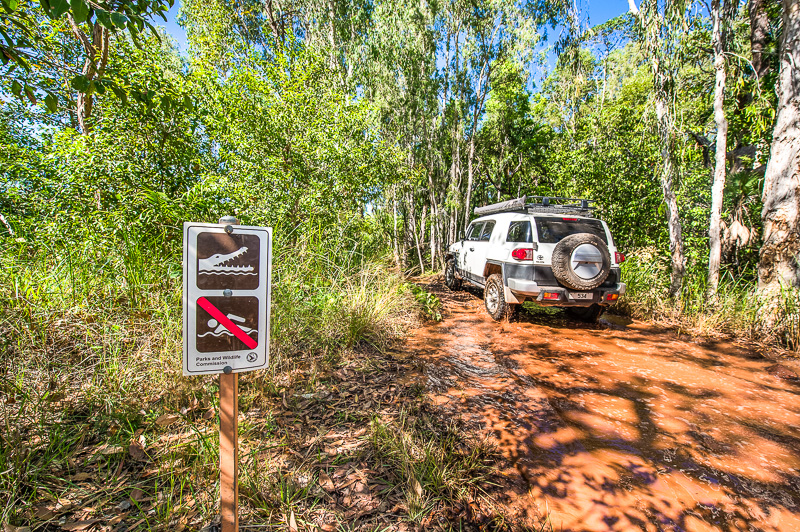
Another four-wheel drive track that you should add to your Litchfield itinerary is the Surprise Creek Falls track. It’s a Grade 2 track, so not too difficult to drive up, but it’s definitely worth the bumpy terrain that meanders through monsoonal forests and opens up at a large swimming pool at the end.
9. Learn about The Park’s Traditional Owners at the Batchelor Museum
Litchfield National Park has been home to the aboriginal people for thousands of years. You can learn about the park’s traditional owners, the Mak Mak Marranunggu, Koongurrukun, Werat, and Warray people at the Batchelor Museum just outside the National Park.
The museum also offers a glimpse into the park’s mining history, Darwin’s importance during WWII, and agriculture in the area.
10. Visit the Batchelor Butterfly Farm
Not actually in Litchfield National Park, but nearby, is the Batchelor Butterfly Farm. Step into the subtropical Butterfly House and wander among colourful Australian butterflies in flight, sipping nectar, and thriving in their man-made habitat.
Beyond butterflies, the surrounding Pet Gardens are the perfect place to let the kids and big kids run loose. Here you can stroke friendly goats, ducks, rabbits and other small animals, and there’s even a chance to meet the farm’s resident saltwater crocodile, Zeus.
11. Adventure to Sandy Creek Falls
If you’re after a slice of solitude, Sandy Creek Falls offers this reward in exchange for a little grit and adventure. Nestled deep within the park’s rugged south region, this long, shimmering plunge pool lies at the end of a 3.4 km return walk that threads through an open valley of paperbark and cycad palms.
You’ll need a 4WD to tackle the unsealed Reynolds River track that leads to the trailhead, which is why these cascades are often unexplored, but for those who have the means will be able to relax in the wide, clear pool at the base of falls without anyone else around.
Is Litchfield National Park worth visiting?
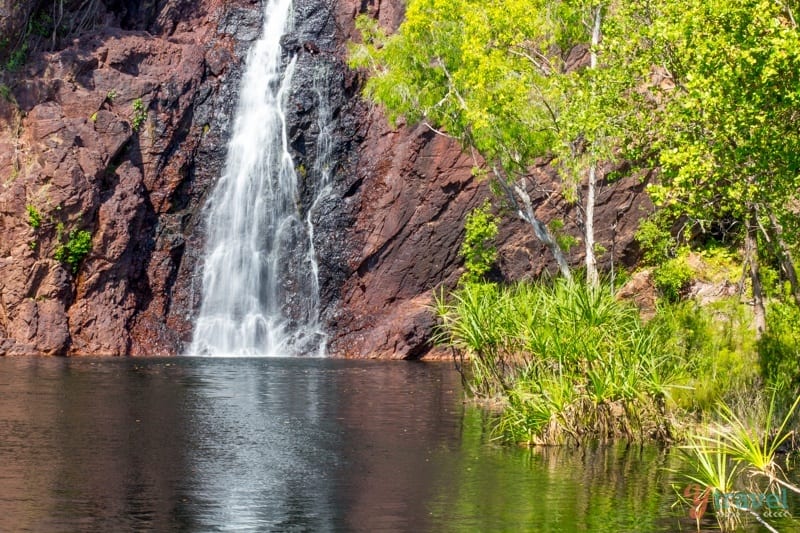
It’s easy to see why Litchfield attracts 260,000 visitors each year; it boasts stunning tropical waterfalls and swimming holes, magnificent rainforests, giant magnetic termite mounds, an abundance of native wildlife, aboriginal historical sites, and many walking and 4WD tracks.
There’s a lot to see and do, as well as off-the-beaten-path adventures to have. It’s one of the best places in the Top End of Australia to go swimming, with waterfalls plunging off the edge of the escarpment into crystal-clear, safe swimming holes. And by safe, I mean salt-water crocodile free!
There are not many places in the Northern Territory where you can safely swim without fear of crocs, so for this reason, it’s 100% worth visiting. If you have at least a week and you’re exploring the Top End of the Northern Territory, then I highly suggest a looped road trip from Darwin taking in Katherine Gorge, Kakadu National Park, and Litchfield National Park.
Want to see other national parks around Darwin? Then consider this five-day tour of Litchfield National Park and Kakadu National Park!
Where to stay in Litchfield National Park
The only accommodation on offer within the national park is camping, however, that doesn’t mean you have to rough it. Many campsites provide well-maintained amenities, and hook up sites for people travelling with RVs.
If you want to stay in a hotel, you can stay near the park but not actually in it. Batchelor is the closest town to Litchfield National Park, and has a lot of accommodation to choose from and easy access to the park.
You can browse more accommodation options in the following interactive map:
Best time to visit Litchfield National Park
The best time to visit Litchfield National Park is during the dry season, which runs from May to October. This is when the weather is at its most pleasant and all roads are open.
However, if you do plan to visit during the wet season in November to April, you do get the benefit of seeing the waterfalls at their fullest and more magnificent. The wet season is also the low season so expect fewer crowds.
If you plan to visit in the wet season, bear in mind many of the 4WD tracks will be closed this time of year. During the wet season, swimming is also not always permitted.
Opening hours and entrance fee
Litchfield National Park is open all year round and is free to enter. You only need to pay for campgrounds, and prices vary depending on where you camp.
Getting there
Litchfield National Park is a 1 hour 15 minute drive from Darwin, which is why you can find many tour operators running a day-trip to the park. If you don’t want to take a tour, we recommend you hire cars from Darwin and take the short drive along the B30 to Litchfield.
Tips for visiting Litchfield National Park
- If you are able to, hire a 4×4 vehicle. While much of the park is accessible with a standard vehicle, you can have an adventurous off-road experience to places such as The Lost City and Tjaynera Falls which is incredibly fun and a unique experience.
- Make sure you plan to visit on a weekday if possible. Litchfield is small enough to enjoy in a day, or big enough to explore over a weekend, but if you can, consider visiting midweek to avoid the weekend rush.
- Whatever time of year you visit, make sure to pack a towel and insect repellent!
Final thoughts
Darwin locals are fortunate to be within relatively easy reach of one of my favourite national parks in Australia. In less than 90-minutes drive, Litchfield offers outstanding nature spots with magnificent landscapes.
We hope this guide helped you plan your visit and gave you some inspiration for what to do there, and how to put your itinerary together.
Pin To Save It On Pinterest
Are you planning on visiting Litchfield National Park? What are you most excited about for your visit? Let us know in the comments!